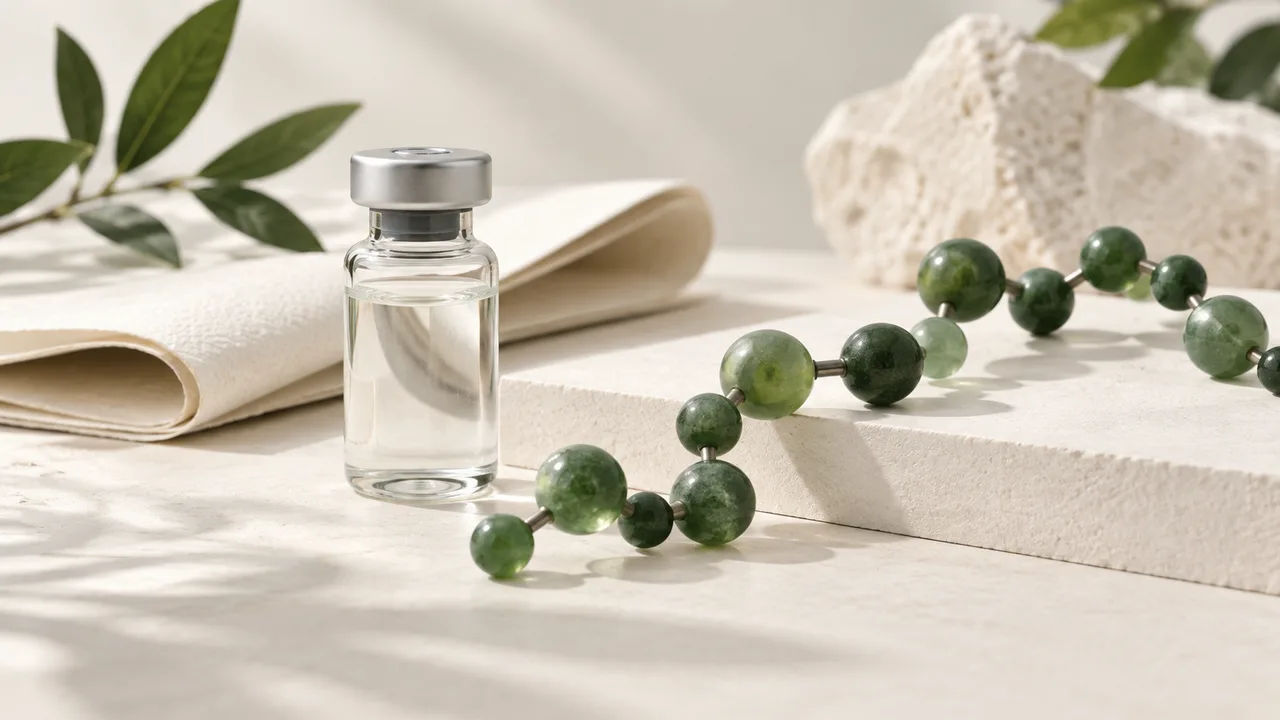
What is the difference between bacteriostatic water and sterile water?
Bacteriostatic water for injection is sterile, nonpyrogenic water containing 0.9% (9 mg/mL) or 1.1% (11 mg/mL) benzyl alcohol as a bacteriostatic preservative, supplied in multiple-dose containers from which repeated withdrawals may be made [1]. Sterile water for injection contains no bacteriostat, antimicrobial agent or added buffer and is supplied only in single-dose containers [2].
A search for sterile water for peptides asks which of the two belongs with a powder vial that will be drawn from repeatedly. The labels answer what each product is and how it is supplied. Both defer the choice of vehicle and volume to the instructions of the drug being prepared [1][2].
What do the bacteriostatic and sterile water labels report?
The bacteriostatic water label carries a boxed statement that it is not for use in neonates, because benzyl alcohol has been associated with toxicity in that age group [1]. Where water is needed to prepare medicines for neonates, the label states that only sterile water for injection without preservative should be used. It also notes that solutions with benzyl alcohol are not for fluid replacement or for epidural or spinal use.
Both labels describe the products as indicated only for diluting or dissolving drugs for intravenous, intramuscular or subcutaneous injection, warn that intravenous water without a solute may cause hemolysis, and ask that prepared solutions be inspected for clarity, particulate matter and discoloration [1][2]. Both are stored at 20 to 25 °C.
The practical distinction is the container. A multiple-dose bacteriostatic vial is designed for repeated entry; a single-dose sterile water vial is not [1][2]. The labels do not discuss research peptides.
| Compound | Status | Half-life input | Package example |
|---|---|---|---|
| BPC-157 | Limited human research, estimated model data | 0.25 h | 5 mg (vendor listing) |
Does the type of water change peptide concentration or units?
No. Concentration is the vial total divided by the final volume, and neither water type adds peptide [4]. A 5 mg BPC-157 vial made up to 2 mL is 2.5 mg/mL whether the 2 mL is bacteriostatic or sterile water, and 10 U-100 units holds 0.25 mg either way [3][4].
What the bacteriostatic label does add is a second, smaller arithmetic: at 9 mg/mL, 2 mL of the 0.9% product carries 18 mg of benzyl alcohol, and a 0.1 mL draw carries 0.9 mg [1][4]. The peptide calculator and the BPC-157 calculator track the peptide; the benzyl alcohol figure is shown here only to make the label's percentage concrete. The step-by-step arithmetic is in how to reconstitute peptides.
How do people record the water volume in PinPoint?
PinPoint's vial setup asks for the vial size and the water volume, then shows concentration and syringe units [5]. The type of water does not enter the calculation, but the volume does, so getting that number right is what keeps every later entry correct.
Daily notes can hold details such as which diluent was used and when the vial was prepared, and the supply forecast estimates when the vial runs out [5]. Each dose is logged with compound, dose, site and pain level [5]. Because the concentration changes only when the volume changes, a second vial made up with a different volume is best entered as a new vial rather than edited into the old one, so the history keeps both conversions.
Get PinPoint on the App StoreWhat do people ask about bacteriostatic and sterile water?
- Is bacteriostatic water the same as sterile water?
- No. Both are sterile water for injection, but bacteriostatic water contains 0.9% or 1.1% benzyl alcohol and comes in multiple-dose vials. Sterile water contains no preservative and comes in single-dose vials.
- Can sterile water be used for peptides?
- The sterile water label describes a single-dose diluent for drugs given by injection, according to the drug maker's instructions. It does not mention research peptides, and its single-dose container is not designed for repeated entry.
- Does bac water change the peptide dose in units?
- No. The units depend on the vial total and the volume added, not on the type of water. A 5 mg vial in 2 mL is 2.5 mg/mL with either product.
- Why is bacteriostatic water not used in neonates?
- The label states that benzyl alcohol has been associated with toxicity in neonates, and that only sterile water for injection without preservative is used when preparing medicines for that age group.
- How much benzyl alcohol is in bacteriostatic water?
- The label lists 0.9% (9 mg/mL) or 1.1% (11 mg/mL) benzyl alcohol, depending on the presentation. At 0.9%, 2 mL contains 18 mg of benzyl alcohol.
Where do these facts come from?
Sources are listed by kind: labels first, then peer-reviewed papers, then PinPoint's own library, arithmetic and app description. Library values were retrieved from the PinPoint application on 5 October 2026; vendor listings support package sizes only.
- Bacteriostatic water for injection label (DailyMed)Description, contraindications, warnings and how supplied: 0.9% or 1.1% benzyl alcohol, multiple-dose vials.Retrieved 2026-10-05 · label
- Sterile water for injection label (DailyMed)Description and how supplied: no bacteriostat or antimicrobial agent, single-dose vials.Retrieved 2026-10-05 · label
- PinPoint compound library, application recordsHalf-life inputs, routes, frequencies, package examples and confidence labels as stored in the iOS app library and mirrored in the peptide guides.Retrieved 2026-10-05 · library
- Unit conversion arithmeticConcentration = amount / volume; volume = amount / concentration; U-100 units = mL x 100; remaining fraction = 2^(-elapsed / half-life).Retrieved 2026-10-05 · arithmetic
- PinPoint App Store descriptionFeature wording from the approved application description, not pricing.Retrieved 2026-10-05 · app-description